

An air conditioner that vibrates noticeably during operation is communicating that something inside the system has changed. During our service calls throughout Virginia Beach, from neighborhoods near First Landing State Park to communities along the North Landing River, we find that significant vibration almost always has a diagnosable mechanical cause. The good news is that identifying it early, before it compounds into a larger failure, consistently produces better and less expensive outcomes. Our Virginia Beach air conditioning services cover all the conditions described below.
1. A Dirty or Clogged Air Filter
Restricted airflow is one of the most common contributors to AC vibration. When a filter becomes heavily clogged, the system cannot draw sufficient air through the return, creating pressure imbalances that force components to work harder and cause vibration during operation. Filter condition is one of the first things a technician checks when a vibration complaint comes in, and it is one of the simplest conditions to resolve when caught early.
2. Frozen Evaporator or Condenser Coils
Ice and frost accumulating on the coils are visible signs that the system is not operating correctly, and the resulting thermal stress can cause noticeable vibration. Frozen coils are often associated with low refrigerant levels due to a system leak.
Why Refrigerant Handling Requires a Licensed Professional
Federal EPA regulations require refrigerant handling to be performed only by licensed HVAC professionals. A technician will locate the leak, repair it, and restore the system to its correct refrigerant charge. This is not a condition that resolves on its own or that can be addressed without proper certification and equipment.
Virginia Beach’s hot, humid summers create an additional factor. When the ambient air carries significant moisture and meets a malfunctioning coil running colder than it should, condensation accelerates, and freezing can occur even during warm-weather operation. Our AC repair technicians regularly diagnose frozen coil issues and understand the specific conditions that contribute to them in this climate.
3. Debris Interfering With the Outdoor Unit
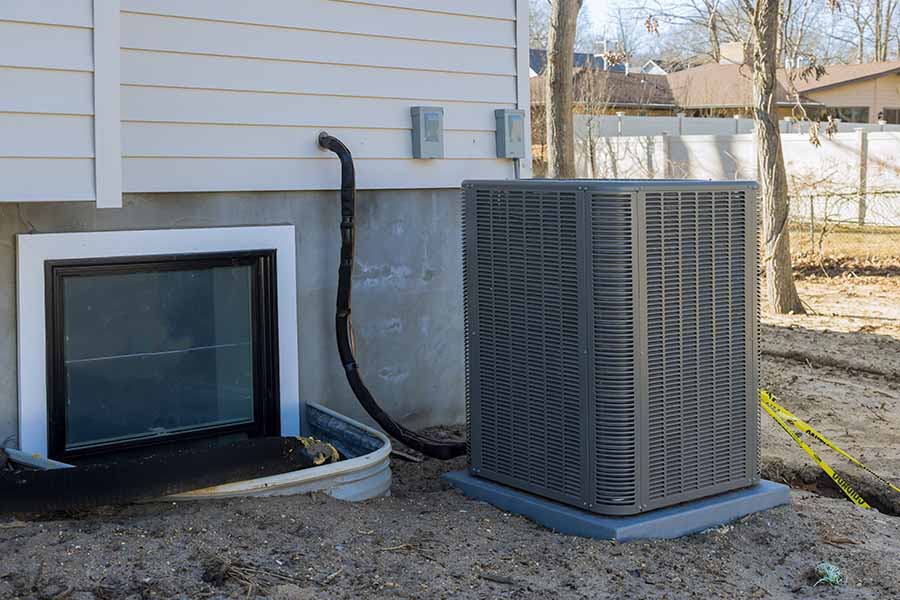
Branches, leaves, and organic debris lodged against or inside the outdoor condenser unit can interfere with airflow and fan blade rotation, producing vibration during operation. Vegetation growing close to the unit, including weeds, shrubs, or volunteer trees, can encroach on the unit’s clearance zone and cause the same problem.
While clearing visible debris from around the exterior of the unit is reasonable, any situation in which material has entered the unit or the fan blades may have been contacted by debris warrants a professional inspection to assess whether damage has occurred to the blades, motor, or internal components.
4. An Improperly Installed Outdoor Unit
The pad or mounting surface beneath the outdoor condenser unit must be level, stable, and correctly sized to support the unit’s weight. A pad that has settled unevenly, was poured incorrectly during installation, or has shifted over time creates a condition in which the unit cannot operate without transferring vibration through its frame and into the surrounding structure.
Improper installation can also involve inadequate mounting hardware or a unit that was not correctly secured to its pad. In either case, a professional assessment is needed to determine whether the foundation requires correction and what the appropriate remediation looks like.
5. Worn or Failing Internal Components
When internal components wear out or begin to fail, the balanced mechanical operation on which the system depends is disrupted. Vibration is a common symptom of that disruption. The components most frequently involved include:
- Unbalanced or bent fan blades: Even minor blade damage alters the rotational balance of the fan assembly, producing vibration that intensifies as the imbalance worsens.
- Worn bearings: Bearings that have lost their lubrication or structural integrity allow shaft movement, producing both vibration and noise.
- Loose internal components: Fasteners and mounting hardware that have worked loose through normal operation allow parts to shift during cycling, producing knocking and vibration.
- Failing compressor: A compressor in the early stages of failure often produces vibration as its internal components begin to wear unevenly.
- Damaged blower wheel: A cracked or debris-impacted blower wheel creates an imbalance similar to a bent fan blade, causing vibration throughout the air handler.
Staying current with AC maintenance is the most reliable way to catch these component conditions before they reach the failure stage. A technician performing a thorough inspection will identify worn bearings, loose hardware, and early compressor wear before they cause a breakdown.
6. Mismatched Equipment Size
An air conditioner that is undersized for the square footage it is serving operates under sustained stress. The system runs longer cycles, works harder to achieve the setpoint, and never fully recovers during moderate peak demand. That chronic overexertion accelerates mechanical wear and can produce vibration as components operate beyond their designed load parameters.
Correcting a sizing mismatch requires replacing the unit with one that matches the home’s actual cooling load. In Virginia Beach, AC installation and replacement must be performed by a licensed professional, and the work requires a permit that a qualified contractor obtains as part of the project. Proper load calculation before selecting a replacement unit is what ensures the new system is sized correctly, rather than simply replacing one mismatched unit with another.
Getting to the Bottom of the Vibration
Significant vibration from an air conditioning system is not a condition to monitor; it will resolve on its own. Each of the causes described here will worsen without professional intervention, and most will cause secondary damage to components that were not originally involved if left unaddressed. If your system is vibrating, contact our team today to schedule a diagnostic and get an accurate picture of what the system needs.

